
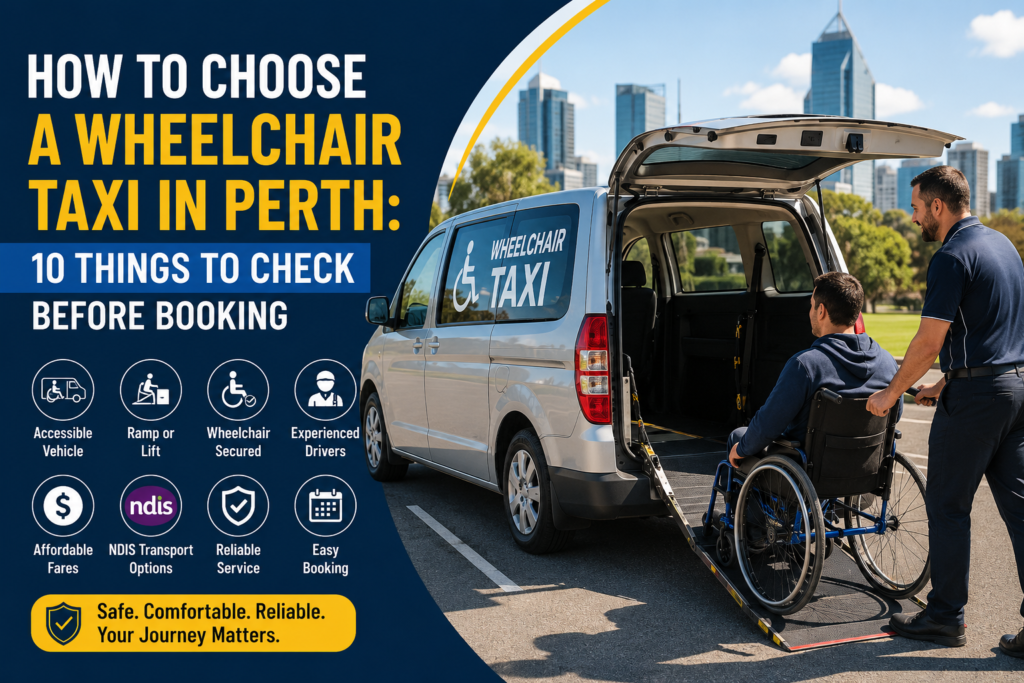
How to Choose a Wheelchair Taxi in Perth: 10 Things to Check Before Booking
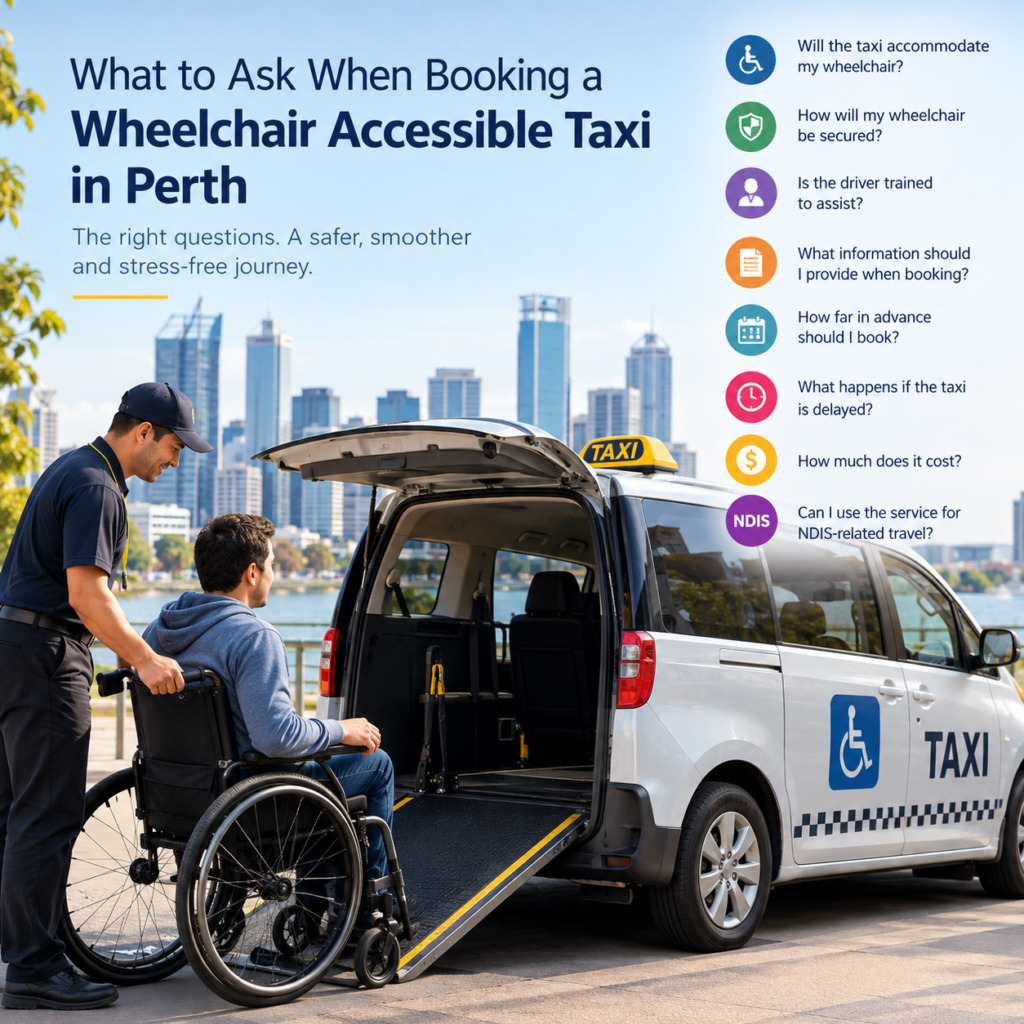
How to Choose a Wheelchair Taxi in Perth: 10 Things to Check Before Booking Knowing how to choose a wheelchair accessible taxi in Perth is about more than simply finding an available vehicle. You need to make sure the taxi is suitable for your wheelchair, safe to travel in, reliable and comfortable. Whether you need transport for a medical appointment, airport transfer, shopping, work or an everyday trip, checking a few important details before booking can make your journey much easier. If you’re wondering how to choose a wheelchair taxi in Perth, these 10 checks can help you compare your options and choose a service that matches your needs. 1. Check Whether the Vehicle Is Suitable for Your Wheelchair Not every wheelchair-accessible taxi is suitable for every type of wheelchair. Before booking, tell the provider whether you use a manual wheelchair, powered wheelchair or another mobility device. Ask: Can my wheelchair fit inside the vehicle? Can I remain seated in my wheelchair? Is there enough space for safe boarding? Can the vehicle accommodate the weight and size of my wheelchair? If you use a larger or powered wheelchair, provide its dimensions and weight when requested. Confirming this before your journey can prevent problems when the taxi arrives. 2. Check the Ramp or Lift A wheelchair taxi should provide a suitable way to enter and exit the vehicle without unnecessary difficulty. Depending on the vehicle, this may be through a ramp or hydraulic lift. Before booking, ask: Does the vehicle have a ramp or lift? Is it suitable for my wheelchair? Can the driver operate the equipment? Is there enough clearance for safe boarding? A suitable access system is particularly important for passengers using heavy or powered wheelchairs. 3. Ask How the Wheelchair Is Secured Getting into the vehicle safely is only the first step. Your wheelchair also needs to be appropriately secured during travel. Ask the provider: “How will my wheelchair be secured during the journey?” You should also ask whether appropriate passenger restraints are available. A provider should be able to explain how the wheelchair and passenger are secured before you travel. 4. Check the Driver’s Experience An accessible vehicle is important, but an experienced driver can make the journey much easier. Ask whether the driver has experience transporting wheelchair passengers and understands how to use the ramp, lift and wheelchair restraints. A good accessible transport service should provide professional and respectful assistance without making the passenger feel rushed. Consider asking: Does the driver have experience with wheelchair passengers? Can they assist with boarding? Can they operate the ramp or lift? Can they help with wheelchair restraints? 5. Book in Advance When Possible Wheelchair-accessible vehicles can be less readily available than standard taxis, so advance booking is a sensible choice for important journeys. This is especially useful for: Medical appointments Hospital visits Airport transfers Work commitments Regular appointments Planned NDIS-related transport For a flight or important appointment, don’t rely on finding a suitable wheelchair taxi at the last minute. When booking, provide the exact pickup location, destination, date and required pickup time. 6. Ask About the Fare Before confirming your booking, ask how the fare is calculated. Depending on the provider and journey, costs may be affected by factors such as: Distance Travel time Waiting time Tolls or applicable charges Booking arrangements Don’t choose a wheelchair taxi based solely on the lowest price. The vehicle’s suitability, reliability, accessibility equipment and driver experience are equally important. 7. Understand NDIS Transport Arrangements If you are an NDIS participant, check how your transport arrangements apply before booking. NDIS funding is based on individual circumstances and plan arrangements, so you should not assume that every wheelchair taxi journey will automatically be covered. Before travelling, check: Your available transport funding Whether the provider works with NDIS participants Payment arrangements Any documentation that may be required If you have a plan manager or support coordinator, they may be able to help clarify your transport arrangements. 8. Make Sure the Service Fits Your Journey Different trips can have different requirements. Medical Appointments Ask about punctuality and whether you can arrange a return journey. Airport Transfers Confirm the pickup time, airport location, wheelchair requirements and luggage arrangements. Everyday Travel For shopping, social activities or other local trips, check whether the provider accepts shorter journeys. Regular Transport If you need transport every week, ask whether recurring bookings are available. Travelling With a Carer Tell the provider how many additional passengers will be travelling with you so they can allocate a suitable vehicle. 9. Check Reviews and Reliability Reviews can help you understand what other customers experienced. Don’t look only at the overall rating. Read individual reviews and look for comments about: Punctuality Driver professionalism Wheelchair accessibility Vehicle condition Booking experience Communication Reliability Reviews from passengers with similar accessibility needs can be particularly useful. A wheelchair taxi that is consistently late or difficult to contact may create unnecessary problems, especially when you have a medical appointment or flight to catch. 10. Confirm Everything Before Your Journey Before finishing the booking, confirm all important details. Check: Pickup address Destination Date Pickup time Wheelchair type Whether you will remain seated in your wheelchair Number of passengers Return journey Accessibility requirements Fare information If you have specific requirements, explain them clearly rather than assuming the provider already knows. What Should I Ask When Booking a Wheelchair Taxi? If you’re unsure what to ask, use this simple checklist: “I use a [manual/powered] wheelchair. Can your vehicle accommodate it?” Then ask: Can I remain seated in my wheelchair? Does the vehicle have a ramp or lift? How will my wheelchair be secured? Are passenger restraints available? How many passengers can travel with me? Does the driver have experience with wheelchair passengers? Can I book a return trip? What will the fare be? Can I book the vehicle in advance? These questions can help you determine whether the provider is suitable before committing to the booking. Can I Stay in My Wheelchair During the